

What is SEO?
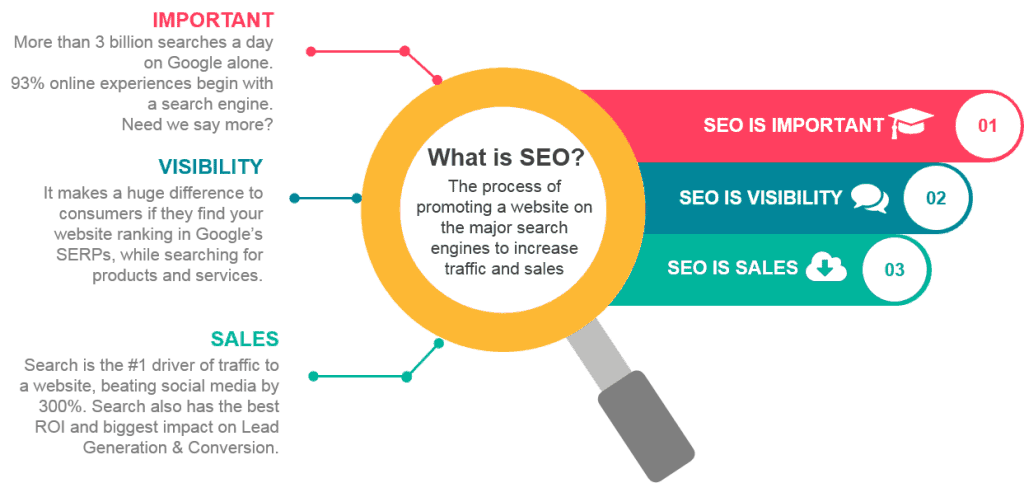
SEO is an abbreviation for search engine optimization. This is the process of raising both the level and quality of website traffic by the use of tactics to improve the website’s online exposure on search engines, especially to a preselected target demographic.
This process of optimizing a website for quality, organic traffic may take some time, but it will yield useful benefits that will rise tremendously over time.
(Organic or earned traffic occurs when you do not have to pay for someone to visit your website.)
Because search engines employ hundreds of parameters to determine search results — Google uses over 200 — SEO works by optimizing your site for these factors as well as getting it crawled and indexed.
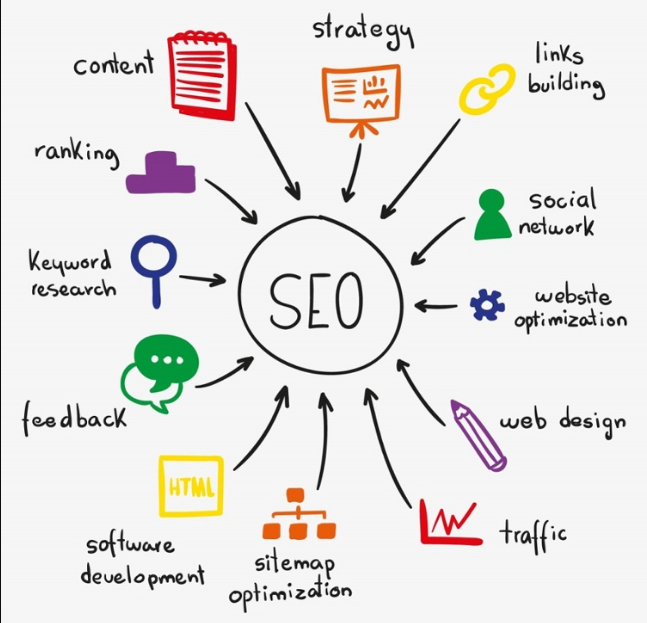
When you understand how SEO works, you can use several strategies to boost your exposure (or how high you rank) in search results, such as keyword research, content production, and page speed optimization.
How Does SEO Marketing Work?
Search engines seek to give their consumers the best service possible. This entails providing results on search engine sites that are not just good quality but also applicable to the searcher’s query. To do this, search engines will examine, or crawl, various websites in order to better grasp what the site is about. This enables them to provide more accurate results to users who search for certain themes or keywords.
Similarly, search engines will scan the site to see how easy it is to browse and read, lucrative user-friendly sites with higher SERP ranks. SEO is the technique through which businesses ensure that their website ranks high in search engines for related keywords and phrases. For example, suppose you have an article about how to build a playhouse.
You would most likely do this to get your material in front of the correct individuals. You will strive to optimize this blog post such that it appears as the first result when someone searches for the keyword “make a playhouse.” There are several advantages to using SEO for your organization.
You may increase your presence on search engines by increasing your SEO. This allows you to reach out to and attract more potential consumers.
You may boost your chances of attracting more targeted organic visitors by developing more interesting and effective SEO-focused content. You may enhance your SEO by optimizing your website and content for increased exposure and readability. You should not accept poor SERP ranks when you may be at the top.
Keyword Research
Knowing how and where to employ keywords in your SEO material will increase your search engine exposure. Incorporating your goal keywords into SEO content authoring will help your site rank higher in search engines. Quality content will assist both Google and your viewers in understanding the purpose of your website. Both will most likely choose your SEO material over other comparable websites.
It is vital to note that, in addition to tailoring your content for Google crawlers, you must also ensure that your material satisfies the demands of your audience. If Google notices that your audience is “bouncing” off your page quickly, it will conclude, “Okay, obviously, this page isn’t addressing the question we think it should.”

How does SEO affect search engines?
Search engine optimization is a product of search engines; search engine providers create ranking variables that are used to find the most relevant material for a search. However, before determining the most relevant material, a search engine must crawl and index it.
Crawling:
Crawling is used by search engines to find and re-discover new and existing websites. Crawlers, often known as spiders, use links to discover and re-discover material, which is why internal and backlinking are important for SEO.
Indexing:
Search engines employ indexing to store online material and then present it through search results. Crawling is followed by indexing. Most pages are indexed by search engines, although spammy, banned, or duplicate pages are seldom indexed.
After crawling and indexing, a search engine will compare sites to its ranking parameters, such as:
- Speed
- Backlink profile
- Keyword usage
- Mobile-friendliness
Remember that search engines do not reveal their ranking elements.
Your content may show in organic search results based on the search engine’s analysis, which means you may start attracting free and relevant visitors to your site!
Google’s Understanding of Your Website
The structure of your site tells Google’s search engine where to go for the most crucial material to display in related queries.
The structure of your website will assist determine if a search engine can grasp what your page and website are about. The more thorough and specialized your site structure, the higher it is likely to rank in Google search results.
You may leverage current SEO material to generate backlinks from others by improving your SEO site structure. This will increase the chances of your other pages ranking as well.
A well-structured website will boost relevancy and help distribute some of the value of those backlinks to other pages of your site.
What is the difference between organic search and paid search?
The difference between organic and paid search is that organic search is free, but sponsored search is not.
When you enter a search term into a search engine, the results show both sponsored and organic listings; paid listings will have the word “Ad” next to them. When you click on a sponsored listing, the advertiser pays for that click. If you click on an organic listing, the website owner will receive no compensation.
While sponsored search is useful and has its purposes, the return on investment (ROI) of organic search makes SEO a wise investment for any organization. That is why it is critical to understand what SEO is and how SEO works so that you may increase your site’s search result ranks and visitor counts.
What Are The Types of SEO?
There are three types of SEO:
On-page SEO:
All on-page SEO methods take place on your website.
Off-page SEO:
All off-page SEO tactics take place outside of your website.
Technical SEO:
All technical SEO tactics take place on the backend of your website.
On-page, off-page, and technical SEO all strive to make your site more user-friendly and trustworthy to search engines and users. When search engine crawlers realize how friendly your website is to them and visitors, the likelihood that your site will rank well for various queries improves.

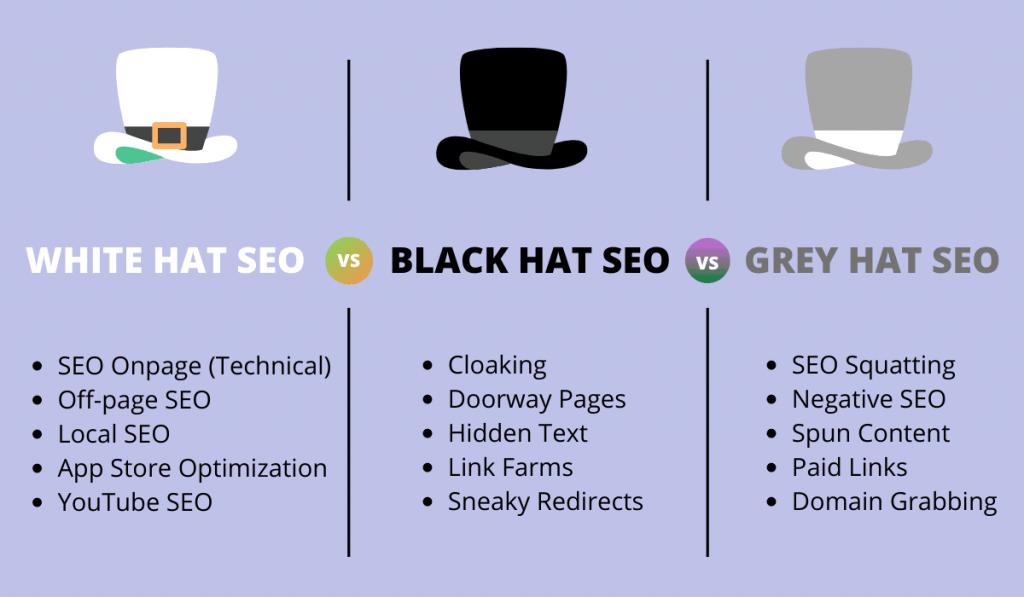
Black Hat SEO Vs. White Hat SEO
White hat SEO:
To improve your site, a white-hat SEO approach employs approved best practices and user-focused methods. A white-hat SEO approach can involve, for example, creating useful content, increasing page speed, and naturally introducing keywords.
Black Hat SEO:
A black-hat SEO approach optimizes your site using unapproved and unethical strategies such as acquiring backlinks, duplicating material from other sites, or even cramming keywords on a page via invisible text.
You’ll aim to provide them with the greatest material available while also making it widely accessible by following the guidelines of the search engine.
Invest in a white-hat SEO plan if you want SEO to succeed for your business in the long run. While black-hat SEO may produce immediate benefits, it will eventually result in penalties for your site, such as lower ranks or removal from Google’s index.
Keyword Research and Selection
The major method Google uses to determine what your website is about is by using the correct keywords. Using tools like Ubersuggest can help you locate appropriate keywords for your topic.
Make sure you don’t shove them into places they don’t belong and remember that providing great content comes first and foremost.
HTML
Title tags, meta descriptions, alt text, and headers are all critical components of SEO marketing. These will be used to inform Google more about your content and what users may expect when they visit your website.
The Architecture of the Website
Your site’s architecture focuses on its design and functioning. If consumers can’t easily browse the site, it loads too slowly, and some components are tough to access, Google will find it more difficult to explore the site as well.
Links
Link construction is critical, but it is complex and time-consuming. The good news is that there are a lot of individuals out there who are doing it incorrectly. This opens the door for SEOs who are ready to go above and above to create links correctly.
Avoid Fiverr bogus gigs that offer 10,000 connections. They are deceptions. You must personally establish each link on sites in your niche that have their own traffic.
Social Media
Social media and SEO marketing complement one another effectively, therefore don’t overlook the social side because it may help your SEO efforts. It takes a lot to rank on Google, and having a lot of social shares may really assist show Google that you’re in it for the long haul and prepared to go to any length.

What is the most crucial aspect of SEO marketing?
There is no one aspect that is more vital than the others. If I were to select one thing you should prioritize, it would be giving them valuable information. You can have all of the SEO parts in place, but if your content isn’t strong, no one will be interested in you.
1. Assess and Tweak Your SEO Strategy on a Regular Basis
You’ll want to keep track of your website’s stats by evaluating your SEO content to see what works and what doesn’t. Your SEO keywords will fluctuate periodically, just like your business. Check back in to see what’s generating conversions and create additional material around those themes.
For example, our post “Geotargeting” receives a lot of attention at Digital Logic. Because this post is more aimed at the legal business, we made it a point to start putting out content directed toward lawyers. Have you ever heard the expression “put your best foot forward and move in that direction”? That is the fundamental idea here.
ANALYSIS OF SEO AND CONTENT
The purpose of your website’s SEO content analytics should be twofold:
Recognize your triumphs and replicate those tactics. Look for emerging trends in your key performance measures. Is your audience watching your videos on a frequent basis? Then grant them their wish! As time goes on, try to adapt your editorial calendar. Then you’ll be able to devote the majority of your time and energy to creating SEO content that connects with your target audience.
To give yourself more time to update and improve your other SEO articles. You may have attempted to optimize one of your articles for a specific keyword, yet it continues to receive more traffic for a version of that term. It’s a good idea to go back and optimize it again for the target term.
Conclusion:
We hope you found this information useful. Keep this page handy as you progress through your SEO marketing journey. The first important thing to realize about SEO is that there are no shortcuts. You must do things well and go the additional mile if you want to stand out.
If you want to see results, plan on devoting at least six months to it. Those who claim that SEO is a “set it and forget it” technique are mistaken. Stay on top of your material, update it on a regular basis, and keep developing amazing new stuff to freshen your site and convince Google you’re still active.


