

Chatbot Malaysia
It’s difficult not to come across a chatbot on the internet these days. You’ve undoubtedly messaged online chatbots to ask a question or have them greet you first, whether it’s a government or eCommerce website. If you’re debating whether to utilize a chatbot in Malaysia for your company and want to know what all the fuss is about, you’ve come to the perfect spot. This article will explain what a chatbot is, major trends and use data, why you should consider employing one, and examples of chatbots in Malaysia.
We have observed a massive shift in the globe as a result of digital technology. Many new technologies have been developed to enhance human-computer interaction, particularly in the business sector.
In today’s world, it is critical for a company to provide the greatest experience for its consumers, in addition to focusing on the quality of its products and services. This is where chatbots come into play. These qualities are an essential component of customer automated processes. Chatbots and virtual agents are some of the newest technology in finance, meant to simplify human-computer contact.
What Exactly Is A Chatbot?
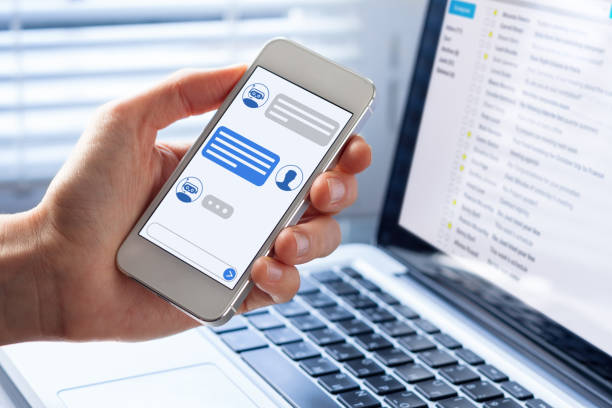
A chatbot is an artificial intelligence (AI) software that can imitate a natural language discussion (or chat) with a user via message systems, blogs, mobile devices, or phone calls.
A chatbot is a sophisticated kind of human-computer interaction. However, from a technology standpoint, a chatbot is just the natural progression of a Q&A system that uses Natural Language Processing (NLP). It aids in the formulation of natural language responses to queries.
A chatbot, in a nutshell, is computer software that can replicate and process human dialogue, whether spoken or typed. When you communicate with a chatbot, you get the impression that you’re dealing with a real customer support agent. This may occur via websites, messaging applications, mobile apps, and phone calls.
This artificial intelligence (AI) application replicates human talks. It is sometimes referred to as robotic aides that understand human limitations. Bots interpret and evaluate user requests, then transmit relevant replies in a timely manner. Bots may be deployed via speech and text, as well as on websites, apps, and messaging systems such as Whatsapp and Facebook Messenger.
By the end of 2020, it is expected that 80 percent of businesses will have a chatbot on their website. Automation technology will aid in the reduction of labour expenses, and advances in artificial intelligence will only serve to improve the creation of chatbots. It is conceivable to predict the impending chatbot revolution in our digital era.
Types of ChatBot
1) Chatbots for specific tasks
These are the most popular chatbots nowadays. Such chatbots are designed to execute a specific task. These chatbots communicate in a very systematic and specialized manner. Task-oriented chatbots are typically used for service and support roles, answering basic questions such as business hours inquiries or more easy inquiries. Consider these chatbots to be a kind of interactive FAQ platform.
2) Data-driven and predictive chatbots
These chatbots, often known as virtual or digital assistants, are far more advanced and customized than task-oriented chatbots. They may execute customized interactions based on a user’s profile and historical behaviour by utilizing predictive intelligence and analytics. These digital helpers are intelligent enough just to learn your preferences and even forecast your demands over time. Amazon’s Alexa and Apple’s Siri are two examples of predictive chatbots today.
More powerful digital assistants can integrate many single-purpose chatbots, extract specific information from each, and then mix the knowledge to execute a job.
3. Chatbots with Scripted Responses/Quick Replies
A programmed chatbot is one that communicates with customers through a sequence of predetermined questions. A questionnaire collection generates this form of a chatbot, or a rule-based chatbot is constructed in which each user behaviour drives the bot to respond or react.
4. Natural Language Processing (NLP) Chatbots
Chatbots are regarded as one of the most important AI applications. They leverage AI technologies to deliver a positive client experience. Before delivering the message to the user, NLP chatbots may measure user reaction, recognize the intent, and then provide the most relevant answer.
5. Chatbots for Social Messaging
Chatbots in this category are integrated into social media and messaging platforms such as Facebook Messenger, Slack, Telegram, and WhatsApp, among others. They are simple to set up.
6. Chatbots that Serve/Action
These chatbots specialize in a single domain. Service chatbots are simple to use, execute jobs quickly, aid in the development of personal client connections, and ease the administration of sales funnels. They provide services such as browsing history, flight status checks, and ticket reservations.
7. Chatbots in Context
These chatbots make advantage of the powers of Machine Learning and Artificial Intelligence to assess previous encounters, correctly adjust replies, and constantly improve the conversational experience with clients.
Now that you have a fundamental grasp of chatbots, let’s look at the existing chatbot market and its projections.
Scope of Work for a Chatbot
Creating computers capable of understanding the natural language has always been a difficult task, and today Natural Language Understanding (NLU) is considered an AI-hard problem, which means that the complexity of such computational problems is equivalent to solving the core artificial intelligence problem with machines as intelligent as humans.
Here are some examples of common chatbox scope of work:
– Create a complete chatbot sequence with automated processes.
– A welcoming message appears
– Chatbot greetings appear
– Use a chatbot to connect staff members (if the person requires to speak with staff)
– Learn about the interests and preferences of people using machine learning.
– Monthly report on chatbot performance and customer sentiment
– Analyze frequently asked questions (FAQs) and add answers to automated chat replies
Chatbot pricing in Malaysia
Pricing may vary based on the functionality of the application that you wish to utilise. Chatbots are expected to cost between RM0 and RM4,500 a month or more. Here are three essential things to consider while shopping for a chatbot and comparing prices:
Create an in-house chatbot for free and you’ll have a basic, workable chatbot to respond to customer requests and questions.
RM0 – RM250 per month: Create an in-house chatbot using visual chatbot development tools to generate new business, acquire immediate leads, update Facebook advertisements, and increase sales.
Hire a chatbot agency for RM2,200 or more per month to design and manage lead generation, sales, customer support, and retargeting.
Every chatbot software has its own set of features and packages. You may wish to make a decision based on the demands of your company.
The Worldwide Chatbot Market
From 2019 to 2024, the worldwide chatbot industry is expected to expand from $2.6 billion to $9.4 billion. Within five years, that will have more than tripled in size. The chatbot market in the Asia Pacific is developing at a compound annual growth rate (CAGR) of 9%. The market in North America is growing at a CAGR of 31.2 percent, while Europe is growing at a CAGR of 30.4 percent.
This is hardly unexpected given that consumers today demand 24-hour service in industries such as banking and finance.
Why use a chatbot in Malaysia?
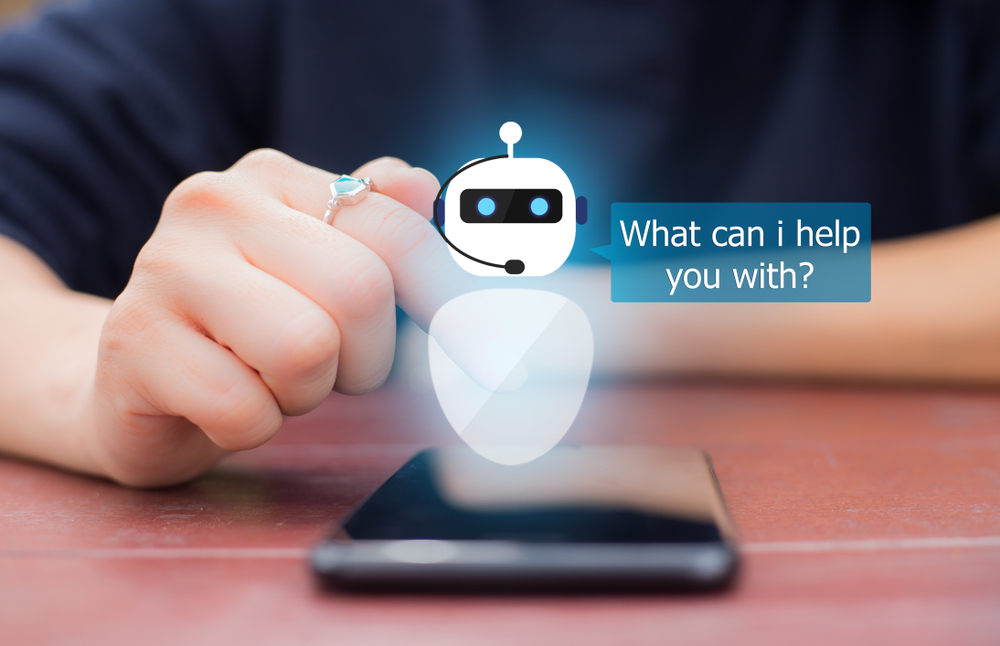
Chatbots have been gaining popularity for quite some time and have received widespread acceptance from a wide range of businesses. It enables businesses to connect with the rest of the world and, more importantly, with their customers via messaging apps powered by communications technology and artificial intelligence (AI).
According to a 2017 survey, Malaysians are the world’s largest WhatsApp users. In addition, the percentage of Online users in Malaysia is expected to reach 24.85 million in 2020, up from 20.65 million in 2017. This population is predicted to rise to 27.34 million by 2025. With the rising number of Malaysian users on Facebook Messenger and Whatsapp, having a chatbot can assist your business in successfully scaling up to meet this growing demand.
If you own a business, here are some of the advantages of incorporating chatbots into your operations:
6 Advantages of Chatbots
1. Increased lead generating
A bot will be able to ask pertinent questions, persuade the consumer, and produce a lead. Chatbots guarantee that the flow is in the appropriate direction to increase conversion rates. This includes a customized message that is intended to guide clients on their purchasing path; chatbots will receive customer information during this procedure.
2. Better customer service
Chatbots can route more difficult inquiries to a live person. This implies that for basic situations, fast support may be offered, while genuine customer care employees devote more time and effort to more challenging matters. This equates to time saves and cost benefits for your company. Your company will also be able to manage more customer support jobs in the same amount of time, making it easier to expand into new areas. It’s a win-win situation for both companies and customers.
Having a chatbot also enables proactive contact with customers. In a competitive business environment, proactively engaging a consumer rather than passively waiting for inquiries might help your company stand out. This has the potential to boost customer views of your brand.
3. Increased customer involvement
According to research, organizations that interact with their social media clients are able to enhance customer engagement. While social media is important, chatbots may help by making interaction more dynamic. Chatbots do not bombard users with useless or repetitive information. They retain your clients on your site in order to improve its performance and keep the dialogue going.
4. Stay up to date on current developments.
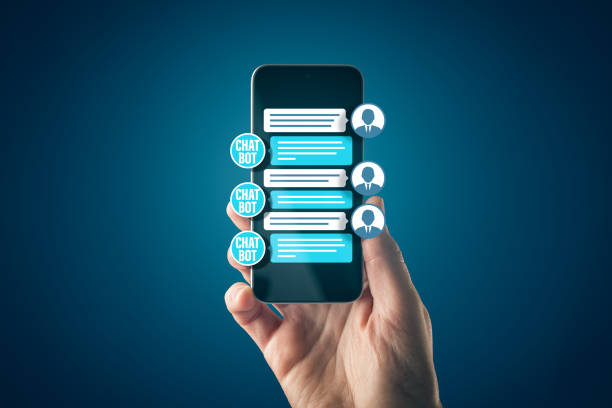
According to statistics acquired by Business Insider, messaging apps had more subscribers than social media in the first quarter of 2015. As more individuals interact with brands via chat, it can be inferred that businesses have a greater possibility to reach more customers with Chatbots.
5. Draw relevant conclusions from data
Chatbots are excellent for answering client questions. However, the opposite can also occur, in which chatbots might check out information from clients that can help your organization. For example, perhaps your company has invested a significant amount of time and effort in developing a landing page designed to convert visitors. Despite your greatest efforts, conversion rates remain poor.
In such a case, a chatbot may be built to respectfully inquire as to why people are departing the landing page. With enough answers, you’ll have useful information on how to improve the page’s performance.
Final Thoughts
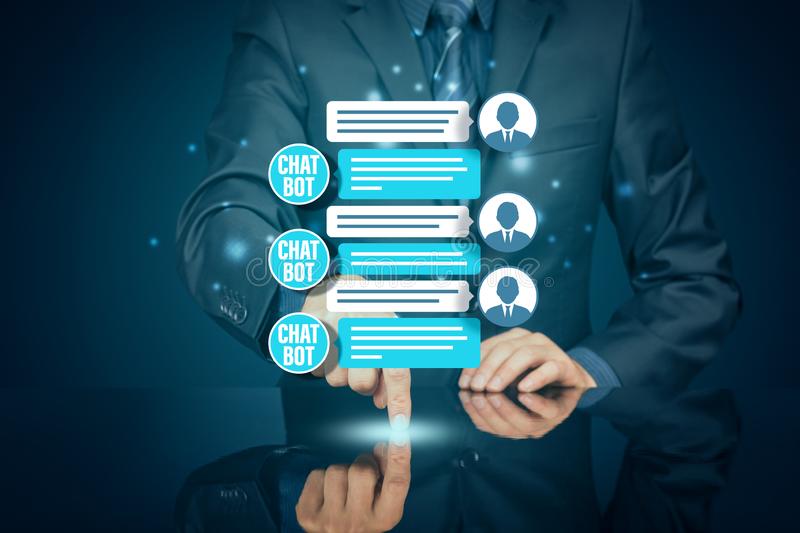
As you can see, chatbots have aided businesses in a variety of industries in better engaging their consumers. Whatever business you operate, it pays to provide excellent service to your consumers and to make use of cutting-edge technology. All of this is possible with the assistance of a chatbot.
Contact us to understand how sophisticated chatbot technology may help you take your business to the next level.


