


What if there was a way of creating your business more successful? What if you could get more bang for your ringgits with sponsored search? Do you want to get a jump start on your competitors? Then keep reading.
If you’ve ever wondered, “What is SEM?” this is the place to start. You are not alone yourself. There are several words in digital marketing that feel familiar or have similar definitions. We want to clear up any misconceptions.
We’ll delve deep into the definition of search engine marketing (SEM) and the best techniques for executing effective paid search marketing campaigns. SEM, or search engine marketing, is a very successful method of increasing your rating on search engines such as Google and attracting quality visitors to your website. Engaging in SEM is a terrific method to enhance brand recognition and sales.
Brands use SEM to pay for advertisements to show as search results on search engine results pages (SERPs). They target certain keywords so that when a person searches for such phrases, an ad from the brand appears. The brand is only charged if the user clicks on the ad.
Paid search advertisements may be featured on nearly every search results page. These sponsored ads are usually at the top and bottom of the page. They carry an “Ad” label to inform users that it is a sponsored placement.
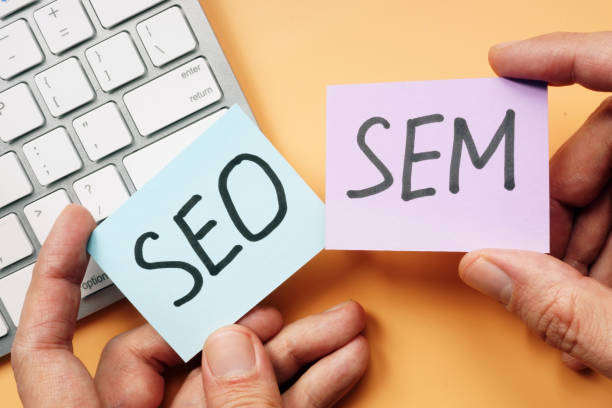
What Is SEM?
Search engine marketing (SEM) is an online marketing technique that tries to improve a website’s online presence in search engine results pages (SERPs). SEM crosses with search engine optimization (SEO) since it can entail tactics such as changing a website’s content and architecture to get higher rankings. Search engine marketing, on the other hand, often refers to sponsored search or pay-per-click (PPC).
SEM is a form of digital marketing strategy that aims to place your company or customer on the first page, if not the top, of search engine results. The goal of this SEM is to bring more traffic to your site, which you can then convert.
SEM vs SEO vs PPC
What is the difference between SEM and SEO?
In general, “search engine marketing” SEM relates to paid search marketing, which is a system in which businesses pay Google to have their adverts appear in search results.
SEO is distinct in that companies do not pay Google for traffic and clicks; rather, they earn a free place in the search results by having the most valuable content for a specific keyword search.
SEO and SEM should both be important components of any internet marketing strategy. SEO is an efficient approach to deliver sustainable traffic at the top of the funnel, whereas search engine adverts are a low-cost solution to boost conversions at the bottom.
Check out this video on what are the differences between SEO and SEM
Search Engine Marketing (SEM)
Search Engine Marketing (SEM) is an overall word for any method used to boost a company’s search exposure or make a will be more often in search. It might involve a sponsored search engine marketing campaign, an organic SEO approach, or both.
Search Engine Optimization (SEO)
SEO, or search engine optimization, employs strategies to increase organic presence in search results. In contrast to SEM strategies that pay for SERP rank, best practices for SEO focus on attracting search engines and obtaining significant organic search results. Organic search results do not have an “Ad” label on them. They are not purchased; rather, they are earned.
Pay-Per-Click (PPC) Marketing
When attempting to answer the question, “What is SEM?” Pay-per-click marketing, or PPC, is another phrase you’ll come across.
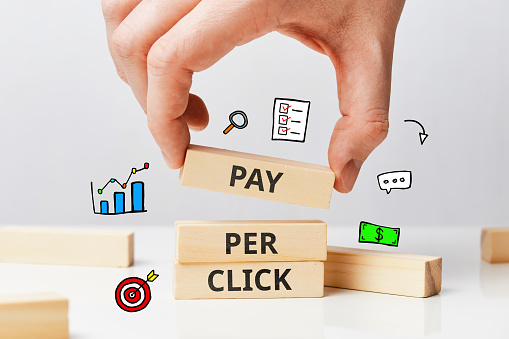
PPC is a paid marketing approach in which a company generates a digital advertisement and gets compensated every time someone clicks on it. When PPC advertising appears in search results, this is referred to as SEM. However, PPC is not necessarily associated with SEM.
PPC methods that are employed on channels other than search are not considered SEM. PPC can, for example, be utilized on websites that enable digital advertisements such as Promoted Tweets or Facebook Ads. PPC also includes Google display advertisements, which charge brands when a consumer clicks on a banner ad on a website.
Search engine marketing (SEM) encompasses all of the tools, approaches, and strategies used to improve the clarity of websites and online pages in search engines like Google and others.
There are two basic strategies to appear at the top of the search results:
Natural or organic results are often placed in the center of the page and are chosen by Google’s algorithm. This algorithm evaluates the website’s relevancy (the quality of the material and the extent to which it answers to a given search) as well as its authority (links from other pages).
Paid results appear at the top of the page as well, but in a column to the right.
In contrast to organic results, the advertiser must pay a fee for each click on their ad. To purchase ad space on search engines, platforms such as Google Ads must be used.
In principle, search engine marketing encompasses both sorts of outcomes. In practice, however, strategies targeted at enhancing organic positioning are classified as SEO, while techniques targeted at ranking among sponsored results are classified as SEM. To prevent confusion, we shall solely refer to the latter as SEM or search engine marketing.
As a result, SEM is a collection of tools, tactics, and strategies targeted at improving search engine advertising, showing in the top rankings, lowering costs per click, and increasing conversions from these ads. Google Ads is the most well-known and extensively utilized SEM platform, although there are other options, such as Bing Ads.
According to surveys and research, Google processes more than 5 billion search queries every day throughout the world as of 2012. In Malaysia, the most popular Google searches were for themes such as entertainment, travel, electronics, vehicles, and fashion and beauty.
As Malaysians spent more time digitally, it is unavoidable that they would utilize search engines to get answers to their questions. This is a huge potential for businesses to attract out a digitally aware audience that is constantly connecting with the internet for a variety of reasons.
Elements of Search Engine Marketing (SEM)
Keywords:
These are the phrases that users type into search engines to prompt the display of a certain ad or search result. They do not have to be separate words. In reality, it is typical to employ word groups or phrases like “purchase Nike shoes” or “what is the greatest accounting software.”
Text Advertisement:
This is the most common sort of SEM ad that appears in search engines, while there are no other possibilities available, such as shopping adverts. Text advertisements often have a title, a visible URL that may be changed, and a brief description.
Advertisement group:
An ad group in Google Ads is a collection of ads that use the same keywords. This allows you to determine which ones are the most successful.
Campaign:
A campaign in Google Ads is analogous to an “umbrella” under which multiple ad groups with similar aims are arranged. For example, if you sell school supplies online, one campaign may include ad groups for textbooks, another for backpacks, and a third for drawing tools.
Impressions:
The number of times an ad was displayed.
Clicks:
The number of times an ad has been clicked is referred to as the number of clicks.
CTR:
The click-through rate (CTR) is the proportion of total impressions that result in a click.
CPC:
The cost per click (CPC) is the average cost per click.
Quality Score:
This is the rating that Google assigns to advertising and keywords, and it determines your cost per click. This score is based on the ad’s relevancy, the proportion of clicks achieved, and the consumer experience of the landing page. The goal of this method is for higher-quality advertising to rank higher and have a lower cost per click.
Landing Page:
This is the URL that a user is sent to after clicking on an advertisement. This page must be optimized for conversions and prompting people to perform specific actions in order to obtain strong results with search engine marketing (like completing a form to download an ebook). To create a pleasant user experience, the keywords, the displayed ad, and the landing page should all be in sync.
Search Network:
These are the locations where your advertisements will display. The most usual location is at the top and right of the results page, although they can also be displayed on other websites such as YouTube.
Platforms for SEM
An SEM platform is a search engine where a business may display search adverts that appear when people conduct a search. Google and Bing are the most popular SEM platforms.
Google Ads:
Google Ads is the most used SEM platform. Because millions of Google searches are done each day, it may assist you in reaching the greatest online audience.
Bing Ads:
Bing Ads claims to reach 3 million searchers that Google does not. Bing Advertisements connects you with searchers who aren’t just utilizing Google by displaying ads on selected partners such as Yahoo and MSN.
SEM Targeting
When you target keywords, you tell a search platform when to show your advertising. SEM targeting goes a step further. You may define extra settings for when your ad should appear and to whom it should appear by targeting.
Demographic Targeting
Ads are only shown to persons who fall into specific demographic groups based on age and gender.
Device Targeting
Ads are only displayed to consumers on specified devices, such as mobile phones, desktop computers, or tablets.
Location Targeting
Ads are only shown to persons who live in a specific ZIP code or geographic location.
Ad schedule targeting
Ads are only shown at particular hours of the day or on certain days of the week.

Ad Copy for SEM
SEM ad copy, for the most part, resembles organic search results. They do, however, have the option of displaying extra information. A typical ad will include two headlines, a description, and a website URL. You can also include:
- Sitelink extensions
- Callout extensions
- Call extensions
- Message extensions
- Location extensions
- Advertiser ratings
- Price extensions
- Structured snippet extensions
How to Develop a Strong Ad for Your Google SEM Strategy
There is one surefire approach to build a strong ad with a high return on investment: data-driven, keyword-rich material. This makes search engine marketing advantages better.
If you use extremely interesting keywords, you will win auctions for extremely well-placed advertising at a cheaper price than your competitors, even if their maximum bid is larger. That’s because your SEM Quality Score is greater, indicating that you have a better understanding of the end-user than your competitors thus improving your search engine marketing (SEM) advantages.
In a nutshell, when writing your ad text, be sure to:
- Use SEM terms that are relevant to the user’s goal.
- Compare and contrast the search volume and competition density of terms.
- Keep expenditures under control by evaluating the campaign structure and ad grouping on a regular basis.
- This is easier said than done, but keep reading to discover our best practices, and your advertising will soon be conquering Google.
What Benefits Does SEM Bring to Your Business?
Produces Highly Qualified Traffic
Organic traffic generation may be a time-consuming and labor-intensive process with long-term payoffs. Search engine marketing (SEM) helps you to speed up this process and attract consumers to your website right away. Furthermore, because they have looked for it, you can be certain that these individuals are keen on what you have to offer.
Increases visibility
Appearing towards the top of Google and other search engine results in ties your brand with a certain need, even if the visitor does not click the first time they see it.
Conversions are generated
Google Ads and other search engine marketing tools’ ultimate purpose is to increase company results. To do this, you will need to design optimized landing pages that guide consumers down the conversion funnel for SEM.
Makes the Most of Your Money
One of the major benefits of search engine marketing is that it is a cost-effective option for businesses of all sizes. If on the other side, your brand is expanding, you may raise the investment and intricacy of your ads to maintain momentum. Furthermore, because you only pay if you get results (in the form of clicks), you can be confident that your budget is being utilized wisely for SEM.
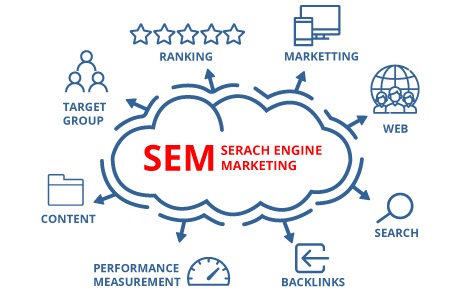
Source: Proideators
Produces Measurable Results
Search engine marketing tools, such as Google Ads, give a plethora of analytics on campaigns and keep you up to date at all times. This makes it very simple to adjust the route if necessary and improve the search engine marketing advantages.
What Factors Influence Ad Effectiveness?
In summary, hyper-targeted ad text and a high ROI are what makes an ad effective. By better understanding your consumer base, you can ensure that you affect the brand in front of them at the appropriate point in the buying funnel. The Advertising Toolkit, which allows you to evaluate search queries and search intent, makes this easier.
An effective SEM ad campaign is a critical component of a very well SEM strategy since it presents your company’s offer in the appropriate place and at the right time. But that’s not all; SEM is also a terrific technique to boost visitors to your website and raise brand recognition.
How to Improve SEM Results?
Strategies for Creating Effective Campaigns
Creating great Search engine marketing (SEM) campaigns necessitates study and strategy both before and after your campaign is up and running.
The strategies listed below can help you improve your campaigns so that you can reach more people, spend less money, and achieve more conversions.
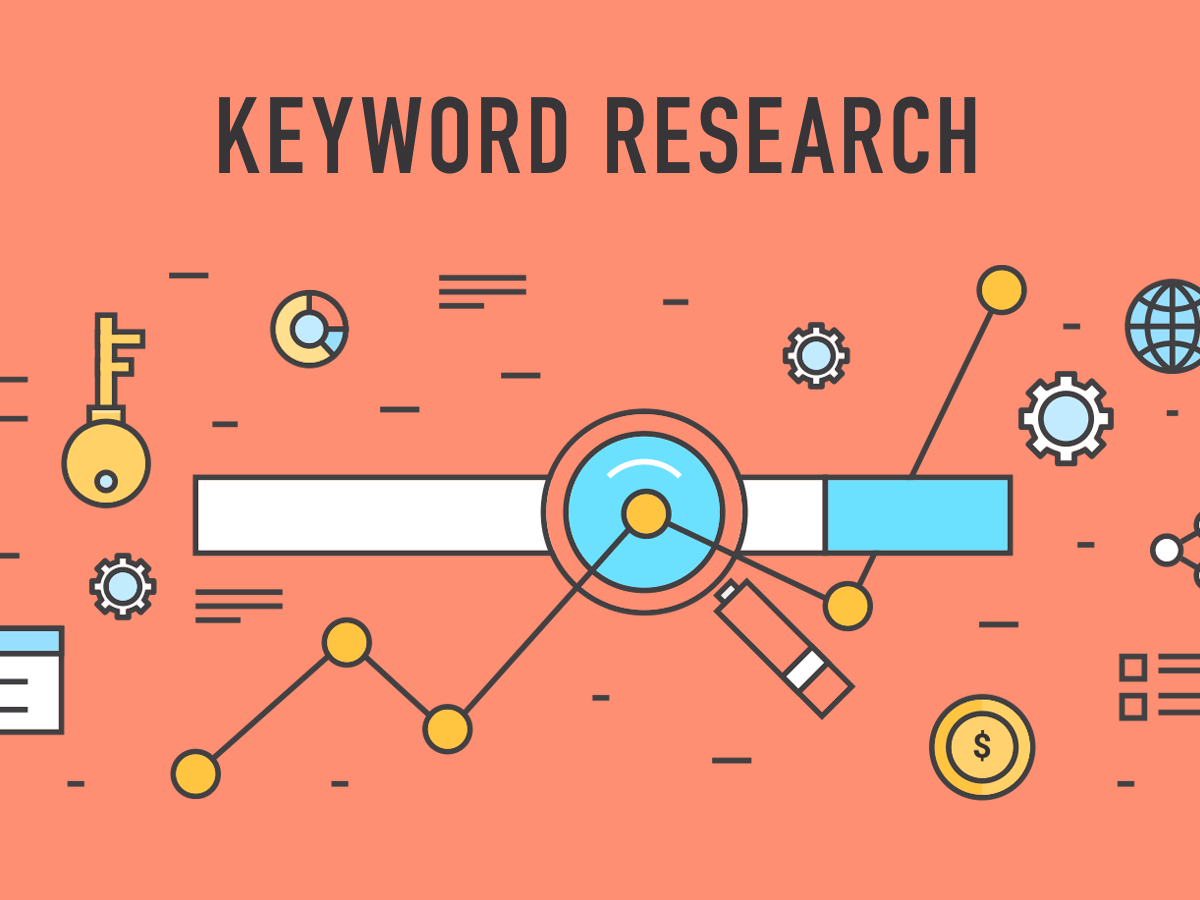
Conduct Keyword Research
Choosing the correct keywords to target is one of the most important aspects of SEM success. Conduct keyword research to identify phrases utilized by your intended audience. Sort results by keyword popularity to uncover the most common terms that your target audience searches for on a regular basis.
Work at the very bottom of your sales funnel
Determine high-converting purchasing phrases that target prospects at the bottom of the purchase funnel. Use Alexa’s Competitor Keyword Matrix’s buyer keywords filter to uncover search phrases with strong purchase intent that are currently driving traffic to your rivals but not to you.
Make Eye-Catching Ads
To be effective, an SEM campaign must persuade visitors to click on the ad. Use the following guidelines when constructing your advertising to increase the number of visitors who click on your search results.
- In the ad copy, include the keyword.
- Make it clear to the reader what value or solution you’re providing.
- Connect your material to the purpose of the searcher.
- When applicable, provide pricing and promotions.
- Include a distinct call to action.
- Make use of ad extensions.
Boost Your Quality Score
A high-Quality Score allows your SEM advertising to appear more frequently and at a cheaper cost. Improve your Quality Score by using target keywords in both your ad content and the landing page it directs to. This informs SEM platforms that the ad and destination URL is relevant to the searcher’s purpose, resulting in a better Quality Score.
Existing Campaigns Should Be Optimized
If you want to get the most out of your SEM strategy, you must also understand how to enhance SEM campaigns after they have been launched. Continue to optimize campaigns after they are up and going for the greatest results.
Add more relevant keywords
When you first launched your SEM campaign, you may have overlooked certain keywords. Examine the campaigns and include any recommended keywords that are missing.
Negative keywords should be set
Examine your SEM campaign and delete any terms that are bringing in the wrong sort of traffic. Negative keywords should be low-performing or irrelevant phrases.
Make use of A/B testing
One advantage of SEM is that you may obtain quicker feedback on what works. A/B testing may be used to produce several variants of your ad tactics. Examine what works and fine-tune your campaigns to identify the best combination of targeting, ad text, keywords, and landing pages.
Begin Creating Your SEM Strategy
Begin designing and implementing your SEM strategy now that you can clearly answer the question “what is SEM?” Begin by utilizing the tools described in this post to identify the ideal keywords for your ads.
Search engine marketing, or SEM, has the ability to help businesses reach their objectives in a timely and scalable manner. It is great to have specialists that have considerable expertise situating companies in Google to make the most out of it. Contact us if you wish to get all of the benefits of search engine marketing for your business.


