


What is SEO?
SEO is an abbreviation for Search Engine Optimization. In the most basic terms, strong SEO improves your internet presence. This implies that the more people who visit your website, the more internet traffic you will receive, and the more likely you will be to sell your product or service to a larger number of individuals. Let’s take a look at why SEO is so crucial.
On a Google search page, there are just ten results—yes, ten. So, when you conduct a Google search, how often would you go past the first page and into the second, third, or twenty pages of results? Most of the time, you won’t have to since the top few alternatives on the first Google page have the information you sought in your search query.
While you may have noticed that SEO, or Search Engine Optimization, is an important digital marketing strategy, you may be unsure of what SEO comprises in this day and age. This guide explains what SEO is, why it is essential, and how to adopt best practices to make your business more discoverable online than ever before.
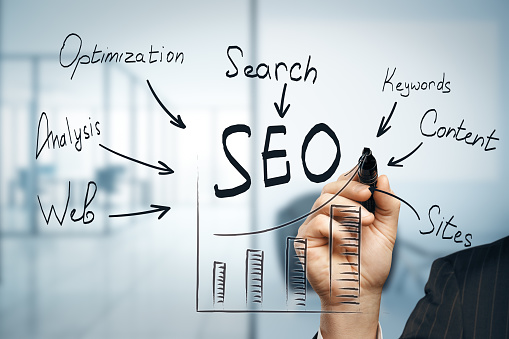
SEO has two primary objectives. The first is to assist you in understanding what consumers are looking for online so that you can develop high-quality content to meet their intent. The second goal is to assist you in developing a website that search engines can locate, index, and comprehend.
Furthermore, adhering to proper SEO strategies is an excellent approach to improve the value of a website by making it more user-friendly, quicker, and simpler to browse.
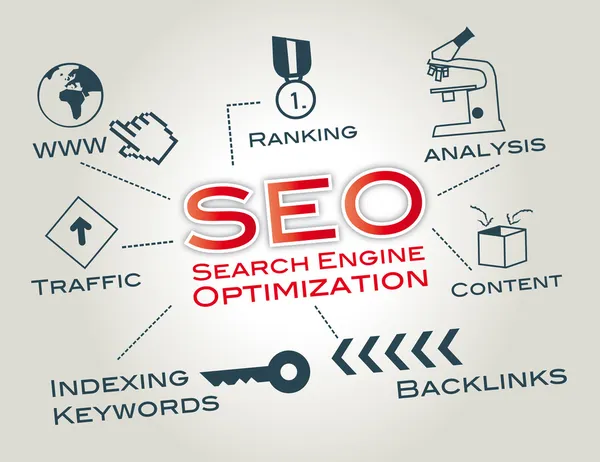
Don’t you want to be on the first search results page amongst your rivals if a prospective consumer puts in a topic relevant to what your firm can provide? If you’re not in one of the top 10 search results, another company has won a new customer—or you’ve lost one.
This is why SEO is important for your business: SEO empowers you to be the go-to person for potential clients’ inquiries. SEO, in addition to increasing exposure and traffic, helps to your confident voice in your sector. Then there’s authority, which leads to brand credibility, which leads to brand loyalty.
When asked why SEO is helpful for business, the response is that it not only draws new consumers, but it also helps you to strengthen your company’s connection with those clients over time due to the trust you have developed with them.
How Does SEO Work?
SEO is entirely concerned with amount and quality. The nicer your website is on both the back and front ends, the more traffic you will receive, and the higher your search rankings will be. Building SEO is accomplished by merging SEO aspects in a data-driven manner. These elements are as follows:
- Keyword Research
- Building Backlinks
- Content Creation
- SEO Content Writing
SEO consists of a variety of methods, activities, and best practices, all with the purpose of enhancing your website’s ranking in search engines—hence the name “search engine optimization.”
On-page SEO and off-page SEO are the two types of SEO. On-page SEO refers to any aspect of your website that you may modify in order to boost your rankings. This includes factors like loading speed, keyword frequency, header content, and so on. Off-page SEO, on the other hand, refers to anything done on other websites that may impact your rankings. In general, this just applies to links.
It requires effort, SEO knowledge, and the proper execution of required on- and off-page SEO variables to optimize your website for top search engine rankings. If the combined SEO strength of your site or a specific page is more potent than all others for a certain query, you will rank first.

Let’s take a peek at how all of them improve your SEO for Digital Marketing.
Keyword Research:
Words have power, and specific words may determine your internet rankings. Keywords can be specific words or phrases that people regularly use to discover the information they want. Keywords must be studied and deliberately put in your article to maintain high quality while employing commonly searched terms.
One of the reasons you require SEO for your business is because of keywords. Prospective buyers will search for a product or service using certain terms or phrases. If your content incorporates the terms and phrases that clients use, you will boost your exposure since you are offering answers by using the proper keywords. The most efficient SEO keywords are ones that have been well studied and examined.
Backlink Building
Backlinks are characteristics on your website that point to other trustworthy, high-quality websites. Building backlinks boost your reputation since you are mentioning sites related to your field of expertise. Incorporating current, trending events directly from their source, for example, can boost your reputation.
Backlink building should be done deliberately to avoid your material becoming buried in a multitude of other resources, which may be troublesome. Plagiarism, for example, is really severe, and you do not want to offer other people’s stuff as your own. Metric Marketing will clean up your backlinks if they are important for your site. Backlink building may significantly improve your SEO, but it must be done wisely and responsibly.
Content Creation
Content is where your SEO truly shines. Your content enables you to communicate directly with your present and future clients. This is where your keywords may help you establish credibility, confidence, stability, and engagement. Strong content helps blend the human aspect of your customer-driven business with the data-driven analytics required to maximize your digital presence.
Anything that your audience sees or hears is considered content, and this includes:
- Blogs
- Webpage text
- Infographics
- Videos
- Social media posts
- Podcasts
- Newsletters
Your content boosts SEO by actively interacting with existing and future consumers, resulting in increased traffic. Your content informs your audience about who you are and what you have to offer.
What is the difference between SEO and Digital Marketing?
Some individuals frequently ask me, “Is SEO the same as digital marketing?” The simplest response I can provide is that SEO is one of the weapons in your Digital Marketing armory. SEO may be part of a larger Digital Marketing plan that incorporates other elements such as social media marketing, PPC, content strategy, and so on.
With or without SEO, good content is the most critical success component. In other words, if you attempt to SEO a website with poor content, your odds of success (in the long run) are slim.
A website with solid content, on the other hand, may do well with or without SEO. SEO will just provide an additional lift to the website.
SEO’s Role in Digital Marketing
SEO is a critical component of digital marketing. It is in charge of increasing your website’s exposure and keeping you ahead of all your competition. It boosts website exposure, traffic, conversion rate, and ROI. A good ranking site is more visible to people than others since it is based on Google’s reasoning, which utilizes the rank of the website.
In this post, we will concentrate on its significance and importance in digital marketing. But first, let me introduce you to the concepts of digital marketing, SEO, and other related topics.
In this digital era, when everyone is gravitating toward digital marketing and its ever-evolving strategies, it is critical to stay ahead of all competition. To be a major component of this new marketing method, you must maintain your visibility among users, which is why several subcategories of digital marketing are crucial. Social engine optimization is one of them.

Why is SEO Important?
SEO marketing is more vital than ever in today’s competitive industry.
Every day, millions of people use search engines to find answers to their inquiries or solutions to their issues. SEO can help you acquire complimentary specialized traffic from search engines whether you have a website, blog, or online shop.
SEO is Google’s method of evaluating which sites are deserving of high rankings for each query submitted into its search engine. Without contemporary SEO, it would be relatively simple to manipulate search results such that the website with the most links or pages—all of which could be readily produced by software—consistently ranked first.
SEO is vital since it ensures that search results are fair. It restricts the potential to influence these results as much as possible so that the sites that show for each search are there because they deserve to be there. Hard effort and a website that appeals to visitors correlate with good search engine rankings, so if your site satisfies these requirements, you’ll have a greater chance of appearing in the results.
Users trust search engines, and obtaining the top place in search engine rankings shows to searchers that your page is a reputable source. The higher you rank in search engine results pages, the more visits and visitors your site will receive. SEO also enhances user experience, making it more likely that shoppers will become repeat purchasers.
SEO is a low-cost option. Competitive sectors can afford to spend a lot of money on sponsored internet traffic. Of course, you can still buy ad space, but if you’re on a limited budget, SEO is a terrific method to generate quality visitors to your site without having to pay for it directly.
Essentially, SEO is vital since it ensures that ordinary people do not have to spend more than a few seconds searching for the information or items they seek. It creates a kind of “natural order” online that would otherwise be absent. Many marketers believe that SEO is critical to their success. According to this graph, 50% of marketers say SEO is the most successful digital marketing tactic.
What Are the Main Elements of Search Engine Optimization?
1. On-Page SEO
On-site SEO refers to changes made to your site’s content to make it more search engine friendly. When optimizing your websites for search engines, you want to indicate to search engines exactly what the content is about in a number of ways.
On-site SEO involves dealing with the layout of your website, SEO keywords, internal links, image alt attributes, and other tactics to assist search engines in analyzing and assessing the content of your website.
2. Off-Page SEO
Off-page search engine optimization tactics entail efforts performed on websites other than your own in order to raise your own rating. The important component of off-site SEO is link building, sometimes known as “backlinks,” which is the process of having other respectable, high-traffic websites link back to your site.
3. Search Engine Marketing (SEM)
Search Engine Marketing (SEM) include paid marketing activities such as native advertisements, Google AdWords, social media ads, pay-per-click (PPC), Google shopping ads, display ads, and more.
Although SEM isn’t necessarily a necessary component of an integrated SEO strategy, it may enable you to reach new and highly targeted consumers. You may also make SEO and SEM operate in tandem.
SEM advertising efforts include the following:
- Campaigns that are paid and targeted
- Copy that is keyword-rich and directly related to your company or product.
- Click-through rates (CTR) and cost-per-click (CPC) are two performance measures (CPC)

4. Local SEO
Local SEO is becoming extremely important as more people search using mobile devices. Nowadays, mobile devices account for 60% of all searches, with roughly half of those queries having a local purpose.
So, if you run a restaurant, local SEO will ensure that when people in your region search for the top restaurants in town, they will find your site.
Other local SEO recommended practices, in addition to employing local keywords, include claiming directory listings, establishing location-specific pages for your site, and generating pages for your business (also known as gateway pages) on Google My Business local directories and Google Maps.
Recognizing the Importance of Search Engine Optimization for Businesses
You may be thinking of investing in SEO for your website is truly necessary. Is it true that certain firms or sectors require more search engine optimization than others? When it comes to SEO, each website has unique requirements. However, it is rarely the firm or sector that specifies such requirements.
1. Visibility and Rankings
Increased visibility, which means making it simpler for prospects to find you when they search for anything you have to offer, is one of the most significant tasks of SEO. Your rating is closely proportional to your visibility.
The higher you rank on a search engine result page (SERP), the more likely prospects will notice you and click through to your site, thus improving your organic page ranking is critical. The more successful your SEO efforts, the higher your position, and visibility, which is especially crucial given that a quarter of online visitors never click past the first SERP.
2. Authority
Page Authority (PA) is becoming increasingly crucial to search engines as it is to online users. Simply said, authority implies that your website is reliable, of excellent quality, interesting, and has something to offer.
Scores vary from 1 to 100, with the greater your number indicating greater authority for your site. You can determine your PA rating using tools like Moz, and while it’s tough to change, many SEO professionals feel it has something to do with link profile – acquiring external links from reliable and well-visited sites.
Check out this video on the importance of SEO
3. Web Traffic
One of the primary aims of SEO is to increase online traffic, and you may improve traffic by increasing visibility and ranks.
For many marketers, the ‘Featured Snippet,’ often known as position #0 since it shows above the first ranking URL, is the holy grail. This is often information pulled from a landing page on a blog that answers a subject people are searching for and may significantly increase your organic click-through rate.
So, if you want more people to see your website through a search engine, you must employ SEO methods that will help you rank in the top five, ideally number one.
4. Better Visitor Experience
Another reason SEO is important is that all of the work you spend on creating outstanding content and on-page SEO optimization increases your site’s usability. This results in a smooth and good client experience.
For example, taking measures to make your site responsive will make it useful for all of your mobile users as well as those who browse from a laptop or desktop computer. Similarly, boosting your page load speed can lower your bounce rate and encourage users to stay on your site longer.
Consumers demand a website to load as rapidly as possible, with a time limit of no more than three seconds! The longer it takes for your page to load, the greater your bounce rate and the lower your conversions.
The ranking element is critical to digital marketing success. However, it is not easy to generate a large amount of user traffic on a website, but SEO techniques will help to increase the likelihood. SEO is the art of increasing a website’s exposure in search engines. Consistent SEO work will undoubtedly yield positive results in digital marketing.
Should You Engage in SEO?
The quick answer is yes! SEO is a deliberate, data-driven strategy to improve the quality of your company’s digital marketing and increase its visibility. The advantages of SEO can only benefit your organization, making the effort spent researching it worthwhile. SEO necessitates much research. It is a difficult and ever-changing profession.
SEO develops as new technology arises and evolves. SEO increases traffic, promotes your brand, engages consumers, and has a direct impact on user experience. SEO is a critical component of your company’s digital marketing success.

Get Started with SEO Today!
Having a good SEO team on your side is critical to the success of your digital marketing efforts. Contact us immediately if you have any queries regarding why SEO is vital for a company or about SEO in general.
We’d love to talk with you about the importance of SEO and how it may help your business succeed. Please send us an email at info@mydbs.asia or use our online contact form to let us know what you’re searching for. We look forward to hearing from you!


