

Any action carried out utilizing any digital media to promote products and services is referred to as digital marketing. This is largely an internet-based activity that aims to sell items or provide services. Marketing is all about interacting with customers at the correct time and place.
The world has entered the digital era, and millions of individuals spend a significant amount of time navigating internet platforms. Businesses are becoming more aware of this reality and, as a result, are capitalizing on the success of these platforms to market their products and services. Marketing is all about interacting with customers at the correct time and place, and if your clients are plenty online, that is where you should go.
Are you ready to discover why digital marketing is the most effective approach for small and medium-sized businesses and industries? Then begin reading about the irrefutable benefits of digital marketing for your company.
What Is Digital Marketing?
Digital marketing is the dissemination of advertisements and information through various digital platforms.
Search engines, social media, email, apps, websites, and any new digital platforms that may emerge with the possibility of advertisement are all examples of digital marketing channels. It also includes offline outlets that include digital media.
Because of the expansion of digital media and digital platforms, the benefits of digital marketing have become the most powerful kind of marketing. Even conventional channels are adapting to accommodate more digital media, emphasizing its necessity in a modern marketing plan. We will go deeper into what digital marketing is by looking at the various benefits it may bring you.
There are several digital marketing strategies, some of them are as follows:
- Search engine optimization (SEO)
- Paid search
- Display advertising
- Social media marketing
- Content marketing
- Email marketing
- Influencer marketing
- Affiliate marketing
Businesses used to contact their target audience through media such as television, radio, magazines, events, and newsletters. As individuals spend more time online, businesses are attempting to reach out to potential customers via digital platforms. Marketers, after all, must go where the people are.
If you want to make the move and broaden your marketing plan, you need first to learn about the advantages of these new digital marketing strategies. So, here are the top ten benefits of digital marketing:
10 Benefits of Digital Marketing
1. Ultimately Low In cost
Marketing and advertising costs are some of the most significant financial burdens that organizations must undergo. While large corporations may not have a problem spending millions on marketing and advertising, for small firms, this may be unfeasible or an excruciating nightmare. Marketing via digital platforms is a more cost-effective alternative to traditional methods. They have the same impact but cost a lot less.
You may sign up for an email marketing service and send transactions or direct emails to thousands of consumers on your mailing list for a few dollars.
2. Global Online Visibility & Reach
Digital marketing is a worldwide phenomenon, and the exposure you can attain with it is enormous. In comparison to conventional marketing, which is primarily limited by location, planning a worldwide marketing campaign may be difficult and time-consuming.
Even a tiny local firm with an eCommerce website may reach a global audience that matches its target client group. Traditional businesses now have a plethora of new growth prospects because of the ease of access to the internet.
Even for a niche product or service, the blend of reach and visibility that search engines and social media networks can offer is a potential for every business.
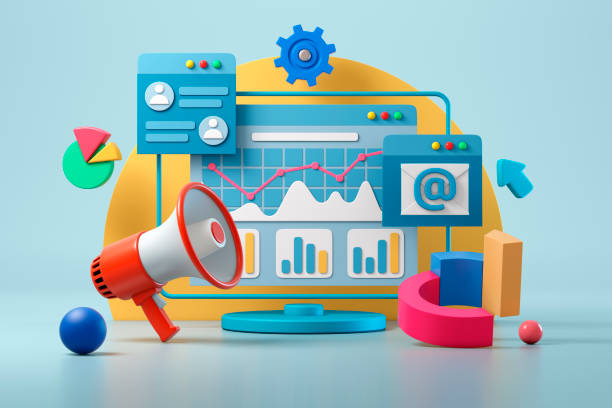
3. Enhances your conversion rate
One of the most noticeable advantages of digital marketing is the increase in your conversion rate. You may boost your conversion rate by investing in online marketing tactics such as conversion rate optimization (CRO).
This is because you have the opportunity to target more particular leads. When you target people who are more likely to be interested in buying or service, you boost your chances of converting them. Your firm gains more conversions, which aids in its growth.
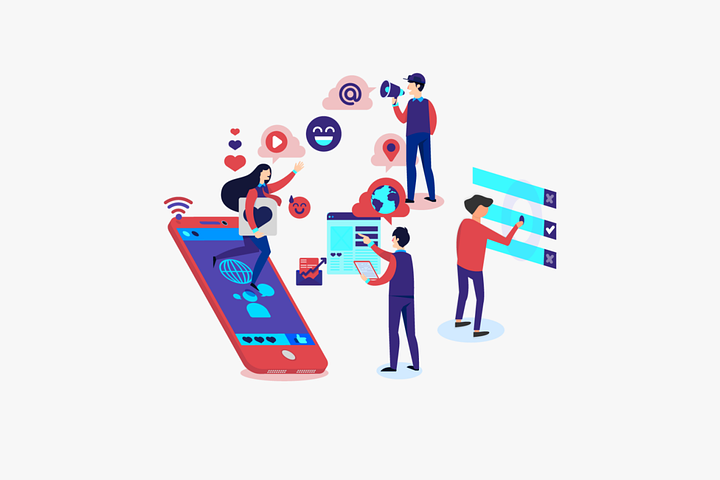
4. Target the Right Audience
Many digital marketing tools now help to target a specific group, making segmenting audiences easier than ever. We have access to web technologies that track a person’s online behaviours as well as demographic information. This data may be used by digital marketers to offer consumers particular items or services that they may be interested in.
For example, if a visitor clicks on a company’s display ad, whether through social media or a search engine, the brand can target that person with future and related adverts. When a visitor receives material based on interests and online activities, it produces intrinsic rewards and makes purchasing easier and more enjoyable.
5. Engage the Client at Every Stage of the Purchasing Process
Prior to the rise of digital marketing, few individuals discussed the customer journey, owing to its difficulty in comprehending and analyzing. Typically, a customer would travel to a real business after viewing an advertisement on TV or in the newspaper, make a decision, and pay for the goods or service inside the store. However, in digital marketing, we can trace every step a consumer takes, frequently beginning with the instant they are prompted to research a solution or product.
Nowadays, it’s normal for a customer to view an ad online, search and compare costs on several websites, then go to a store to sample the goods or purchase online. Mobile applications give buyers exclusive offers and promotions, customer service, and comparison tools, all of which help us better comprehend the purchasing process. A marketer may track a customer’s full purchasing journey via digital marketing.
Check out this video on the various benefits of digital marketing
6. Increased Engagement
The cyber-world is becoming increasingly crowded, and whatever service or product that your company provides is almost certainly also provided by thousands of other companies. The overall click-through rate on websites has grown, while users’ attention spans are decreasing. When users to a website do not find what they are seeking right away, they depart for another website.
The key to being relevant and retaining consumers in today’s highly competitive business environment is to maintain a consistent connection with your target audience. By connecting customers through various digital media platforms, effective marketing enables firms to remain competitive and relevant.
These platforms enable firms to answer client concerns, dispel myths, and potentially drive purchases. This may be accomplished through frequent informative blog entries, mailings, events, advertising, and special offers.
7. Measure All Outcomes Accurately
It is tough to monitor the effectiveness of your marketing activities when using offline marketing. For instance, if you publish an ad in a newspaper and a billboard at the same time, you won’t know how many people saw the newspaper ad or how many saw the billboard ad. What’s more difficult is determining which ads are more effective and which to spend on.
However, similar concerns do not exist with digital marketing. In fact, you can measure everything worth measuring with digital marketing. From the moment the ad is clicked until the visitor exits the page. Everything! You can assess how many people saw your advertisement, how many purchases came from the advertisement, and, ultimately, your return on investment (ROI).
This monitoring or measuring is made feasible by data analytics software (such as Google Analytics) and metrics from social networking sites or ad platforms (such as Facebook Ads and Google Ads).
However, because there are several trackable indicators, it is critical that you select the most significant data. This vital information is referred to as key performance indicators (KPIs). KPIs are indicators that show an effective company outcome and are connected to the goals and targets established in strategy planning.
KPIs include the following:
- Return on investment (ROI)
- Cost-per-click (CPC)
- Customer acquisition cost (CAC)
- Customer lifetime value (CLTV)
8. Boost Brand Credibility
The internet is the best way for any brand to establish trust rapidly and sustainably. According to content marketing research, digitally active companies have the highest credibility. A company’s content may answer consumers’ concerns, explain key ideas, and demonstrate that it knows what propels its market.
Content that is useful and entertaining helps a firm acquire the trust of its consumers as well as industry experts. It can be effective to the point that competitors start citing it in their articles as well. But how can you tell whether your brand is credible? One thing to keep an eye out for is its position in the organic search engine results pages (SERPs).
If you rank at the top of Google, for example, you are a market reference. This draws additional stakeholders to your company and increases trust in what you create. After all, it’s only reasonable to rely on industry leaders, isn’t it?
Blogging is one method for establishing your knowledge. Consumers desire high-quality information that solves their problems and concerns. Your company’s subject matter specialists offer valuable insights that should be discussed with your target audience. According to HubSpot, firms that blog get 67 percent more leads, and customers recall a brand after five to seven impressions.
9. You may make changes as you wish with digital marketing.
One of the most significant advantages of digital marketing is the ability to make changes as you go. This is unique in the world of digital marketing. Traditional approaches make it impossible to alter your mind after you’ve made a commitment. Once your posters or billboards are up, you won’t be able to change them until the conclusion of your campaign.
This is difficult on your expenditure because you can’t adjust your campaign once it’s live to improve outcomes. When you engage in internet marketing, you have the flexibility to make adjustments anytime you choose.
You may make changes to your PPC campaigns, social media advertisements, SEO efforts, and content as needed. This means you may tailor your marketing to certain audiences.
10. Equalizes the Competitive Landscape
Of course, major corporations have significant marketing resources, but digital marketing offers an equality of opportunity for all businesses, large or small. Content marketing and SEO involve expenditures, but they do not have to be prohibitively expensive. You can rank for long-tail keywords if you can develop high-quality content that resolves people’s inquiries. It may take some time, but it is doable.
It is true that large corporations may spend a lot of money on digital advertising efforts. However, money isn’t the only element that influences an ad’s ranking on the SERP. Before calculating ad rank, both Google Ads and Bing Ads assess an ad’s relevancy and quality. You can obtain the top place on the SERP if you have an extremely interesting ad that answers searchers’ inquiries.
Final Thoughts
Nowadays, digital marketing is required for the development of a successful contemporary firm. The numerous benefits of digital marketing may help your organization to be the best it can be. Whether it’s increasing revenue and leads or raising brand recognition.
Digital channels will continue to expand their audiences, and knowing where to advertise your business most successfully is one of the challenges you must address.
Companies that take advantage of rising online audiences will be far ahead of their competitors if they comprehend what’s next in the domain of digital and online revolution.
Hire DBS Asia Management as your digital marketing professionals to stay ahead of the competition!


