


Digital Marketing Misconceptions & Myths
If you’re like most real estate marketing managers, you’re undoubtedly worried about whether you’re executing your digital advertising correctly. As an emerging industry, it is easy to become engulfed in the uncertainty and disinformation that surrounds the digital marketing landscape. While we promote taking chances in this business, even if the conclusion is uncertain, there are recommended practices and things to avoid in order to save lost time and money while increasing ROI.
Social media has evolved into an essential marketing tool, but it has also made it simple for people to propagate ‘false news’ about everything and everything. Being aware of them and staying current with industry developments should be a goal for marketers.
Marketing is not for everyone, but thanks to digital marketing, its message is reaching nearly everyone. The simplicity with which digital marketing tactics may be implemented may lead many newcomers to believe that they are marketing experts. Professional marketers are well aware that it is seldom that simple.
We’ll go right to the point: the most common fallacy regarding digital marketing is that it can be executed successfully with little to no guidance. Some of the so-called digital marketing myths that were formerly thought to be real have been examined and proven to be false. In this post, we will aim to debunk several commonly held digital marketing myths with the goal that more entrepreneurs will be motivated to make their products, companies, and services stand out on the internet platform.

Here are 10 typical digital marketing myths we’ve noticed going around to keep in mind as you develop your plan.
10 Common Misconceptions in Digital Marketing
1. It is not intended for small businesses.
It is a prevalent misconception that digital marketing is only available to large corporations and that small business cannot profit from it. On the contrary, digital marketing is so inexpensive that small business owners may quickly transition from traditional to digital marketing tactics. It enables you to communicate with consumers (without a call centre). You may sell straight (without even having a shop) and study your customers’ preferences (without employing market research)!
2. A website is sufficient for marketing
It is a prevalent misconception that merely having a website may assist improve leads and sales. While having a website is essential, it will not be sufficient to create quality leads and convert them into clients. Launching a high-quality website entails several logistics and considerations. It must be optimized for search engines, user experience, and analytics.
It should contain high-quality pictures, and valuable material, and be updated on a regular basis. It is critical for Google to position it towards the top of the search engine results page and so get more organic traffic and keep your audience engaged if it works on current software and is easily accessible on all devices.

3. Only large website traffic can ensure the success of digital marketing.
One of the most common digital marketing myths is that the digital market’s success is due to high website traffic. On the contrary, the efficacy of digital marketing is determined by attracting the correct type of consumers to the website. The secret to successful digital marketing is to focus on a specific consumer base that is really interested in the products and services that your company provides.
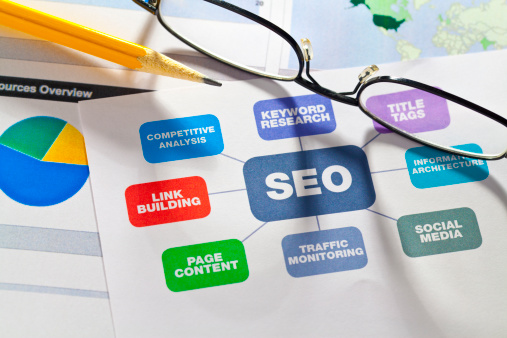
4. SEO is no longer relevant.
With social media becoming increasingly prominent as a more effective means of promotion, many people are dismissing SEO as a marketing technique. However, 93 percent of online encounters start with a search engine, demonstrating the importance of SEO in marketing.
Similar to the SEO myth, businesses often assume that paying for Google Search Ads would force Google to enhance its organic ranks. This is not correct; nonetheless, if an advertiser has both paid and organic results on the SERP, consumers are more inclined to click on the organic link.
5. Another term for social media marketing is digital marketing.
No! Social media marketing is a part of the larger category of digital marketing. Social media is a digital marketing tool, but it is not the only one. Digital marketing employs a wide range of technologies to reach out to clients, from mobile-friendly websites and SEO to PPC and email marketing.
6. Email marketing is ineffective.
The idea that email is dead has persisted for some time, although email remains one of the most successful digital advertising tools. Every dollar invested in email marketing generates 38 dollars in income. In fact, email generates 40 times more money than Facebook and Twitter combined.
The average office worker receives 121 emails each day, demonstrating how popular emails are and how their power to create traffic and enhance revenue should not be overlooked. Another compelling argument to use email marketing is that it may be automated, allowing you to spend more time brainstorming and analyzing and less time implementing.

7. Digital marketing is not an essential component of a company’s business plan.
Contrary to popular belief, digital marketing should be an integral element of a company’s overall business plan. As more individuals use social media and the internet to seek product information, the company’s website functions as a “shop window” for communicating with the company’s ever-growing online client base. The internet presence of a firm is very important in defining the market impression of the organization, as well as its future successes and failures.
8. One-on-one marketing is too time-consuming.
Contrary to popular assumptions, one-on-one marketing is not an unreachable aim. Personalizing your marketing may help you increase brand recognition and attract more clients to your real estate projects. Personalized marketing allows you to target clients with information based on their tastes, lifestyles, and purchasing habits, and give exactly what they need to solve their specific problem points.
To maintain track of this information, we recommend utilizing a CRM. This might also assist you in anticipating their future requirements. People nowadays are inundated with options, and if you can’t provide what your clients want when they want it, they’ll just walk on to your competition. A simple action like including a client’s name in the body of your emails might make your clients feel as though they are being addressed personally, increasing open rates.
9. There are too many social platforms, and social media will not be effective in my sector.
Yes, the popularity of social media platforms is changing swiftly, but being afraid of new things is a proven way to pave the road for your competitors to cross the finish line. Remember that each social site has a unique customer, and the best method to boost brand awareness is to be present where your target demographic spends their time.
And they do spend time on social media! Approximately half of the world’s population is on social media (65% of children under the age of 13 are excluded), with 1 million new users joining every day. Online content consumption has increased in 2020 and shows no signs of decreasing.
Each site has its own vibe, and it’s vital to keep that in mind while sharing content on social media. For example, on LinkedIn, you generally won’t want to use as many hashtags as you would on Twitter.
If you don’t have the means to publish on every platform on a daily basis, it’s fine to start small and work your way up. Aside from the usual networks found in North America, we advocate experimenting with something new, such as WeChat, which may open the door to a whole new market, unlocking a new cash stream.
10. The outcomes of digital marketing cannot be tracked.
Another common fallacy is that effective analytics make it simple to see how digital marketing is performing for you. Google Analytics is simple to use and provides useful information on how many people visit your website and which media works best for sales. Every marketing campaign you start through digital media may be monitored to levels you never imagined imaginable.
Wrapping up
Misconceptions and fallacies about digital marketing have been around for a long time and continue to stymie business success. But, owing to the rise of a technologically driven society! Accurate information is only a mouse click away. Businesses may separate facts from misconceptions by using the correct internet tools. The realm of digital marketing offers wonderful chances to catapult a firm to success, but only if the myths around it are dispelled.
Myths and misconceptions regarding digital advertising abound, making it easy to mistake them with accurate facts. Fortunately, if you conduct an adequate study before implementing a digital advertising plan, you may educate yourself on effective strategies.
Are you having difficulties with your digital marketing efforts? There is a lot to think about, and determining where to start to have the greatest impact might require time and resources.
DBS Asia’s skilled, data-driven teams can build, implement, and report on comprehensive digital strategies in English, Malay, and Chinese to optimize ROI while maintaining transparency at all times. Contact us today to schedule a strategy session so we can assist you in breaking into a new market and accelerating your company’s growth.


